
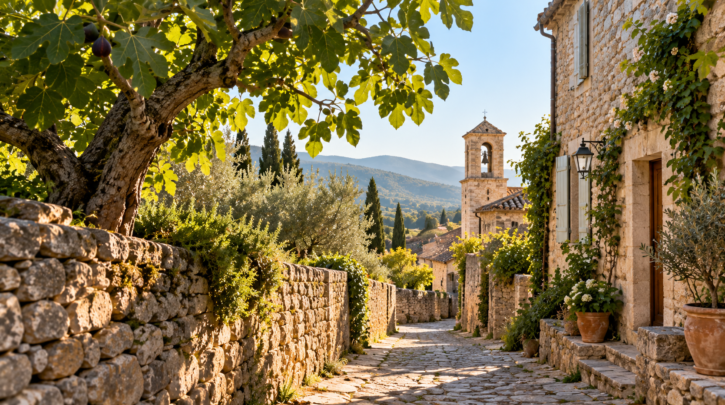

Standing in the village where your family lived is a different kind of research from reading a register. You may find the house, the church and the cemetery, or you may find a priest who lives in the village but cannot be found, a church damaged by an earthquake and a landscape that tells you more than the paperwork. This guide explains how to prepare a visit to an ancestral village in Croatia: how to confirm the right place, which offices and people can help, what travelers’ accounts say to expect, how the record holders divide the material and where our knowledge ends. It draws on traveler accounts, a tour operator’s description of heritage visits, FamilySearch’s gazetteer guidance and older Croatian genealogy guides, as of October 2026.
Confirm the parish before you go
FamilySearch’s page on Dalmatia says that for research in the former Austro-Hungarian lands you must know your ancestors’ town, and that if you have only a village name you will need the name of the larger town it was part of, because records are kept locally. A research guide shows how this works in practice: the village of Lovinac in Dalmatia had no church, so Roman Catholics living there attended church at Polichic, and the church books are cataloged under Polichic. A village may therefore have no register of its own. Our guide to place names and gazetteers explains how to find the parish, and our five-layer guide explains the method.
Free Download
Not sure where to start with your Croatian ancestry?
Get the Croatian Genealogy Quick-Start Checklist: six research steps in order, the six terms you’ll see everywhere (matične knjige, župa, status animarum and more), and the one free record collection to bookmark first.
Who can help on the ground
| Who | What accounts and guides say they can do |
|---|---|
| The local registry office or city hall | A tour operator tells of a traveler whose first calls to the local registrar’s office produced the exact names of several relatives and the locations of their houses in the village. An older genealogy guide says the city hall holds birth, death and marriage records from 1860 to the present, a statement we could not match to current law |
| The parish priest | The same operator says that at the village the traveler visited, the local priest opened the church exclusively for the visitors. A blogger describes a village priest who lived in the village but could not be found on the day |
| Local people | Operators describe meetings with living relatives or locals who knew relatives |
| Archives | Historical archives hold registers older than a threshold, and the State Archives can say where a register is kept, as our archives guide explains |
| The Croatian Heritage Foundation | A national diaspora institution in Zagreb. We did not verify whether it helps individuals trace villages |
The older guide also says that churches were allowed to keep religious records such as baptismal records and the status of souls books, and that death and marriage records older than 1860 were turned over to district historical archives. FamilySearch gives a different threshold, saying registers more than 100 years old were transferred to archives in 1957, and the two cannot both be exact. Ask the registry office and the parish which registers they still hold.
What a village visit looks like, from the accounts
- Churches may be damaged or closed. A blogger who visited two villages near Zagreb found the church of Our Lady of the Snows in Dubranec damaged by an earthquake, and could not reach the priest, who lived in the village. She wrote that she would have to contact the parish priest later for more details.
- The cemetery is a good place to start. The same blogger visited the church cemetery in Dubranec, and a tour operator describes visiting the house of ancestors and the local cemetery with a family.
- A house may still be standing. The blogger found a maternal great-grandmother’s ancestral home in one village and the birthplace of her grandmother’s family in another.
- Locals may know more than the paperwork. An operator describes letting guests learn their family’s story from locals who knew their relatives.
- Plan the archive and the villages together. The blogger’s trip combined an archive visit in Zagreb with villages near the capital, and she chose the capital’s archive because her villages had no archive of their own.
Island and coastal villages
For island families, the ferry timetable is part of the plan, as our transport guide explains. Studies of the Adriatic islands describe small isolated communities with strong drift and endogamy. Our own inference is that many people in an island village may share a surname, so bring the surname variants and a note of the parents’ names. On the coast, remember that older records may be in Italian or Latin, and that the name your family uses may differ from the one in a register.
Courtesy and care
These points are our own advice, not rules from a source. Ask before photographing people, houses or private land. Treat churches and cemeteries as places of worship and mourning, and avoid disturbing graves. Bring a short note in Croatian that gives the surname, the village and what you hope to learn, and leave your email address with anyone who might be able to help later. Record what you see: the cemetery name, the stone’s text copied exactly and a photograph of its position. Visiting around 1 November is a special case, which we cover in our guide to holidays and cemeteries.
A worked example, invented for illustration
Example (invented, for illustration only): A reader’s great-grandmother came from a village on Brač. Before the trip, the reader confirms from a gazetteer and an archive’s register list that the village belonged to a neighboring parish. She emails the municipal office with the surname and the village and asks which offices hold records, takes the car ferry from Split, visits the parish church and cemetery and leaves a short note in Croatian with her email address. A woman tending a grave tells her that a family with that surname lives in the next village. The reader writes down the name, thanks her and later searches the register for the family’s baptisms.
What we could not verify
- Whether a given priest or registry office will help a visitor, which depends on the parish and the office.
- The current rule on which records stay with a registry office and which go to archives.
- Whether the Croatian Heritage Foundation helps individuals trace villages.
- Church opening hours and cemetery access for any particular village.
Sources include a tour operator’s account of heritage travel, a traveler’s account of visiting two villages, FamilySearch’s page on Dalmatia, a guide to Croatian research at the Family History Library, an older guide to Croatian genealogy and FamilySearch’s page on Croatian church records. The traveler and operator accounts are personal or commercial descriptions, not guarantees of what you will find.
This guide is part of the complete guide to planning a Croatian roots trip. More are in Heritage Travel in Croatia.
Disclosure: Croatian Roots may earn a commission if you buy through some links on this page, at no extra cost to you. Our affiliate disclosure explains how we handle that.
