
 Written by: Croatian Roots Editorial Team
Posted on: October 19, 2026
Croatian Holidays and All Saints’ Day: Planning a Roots Trip Around Them
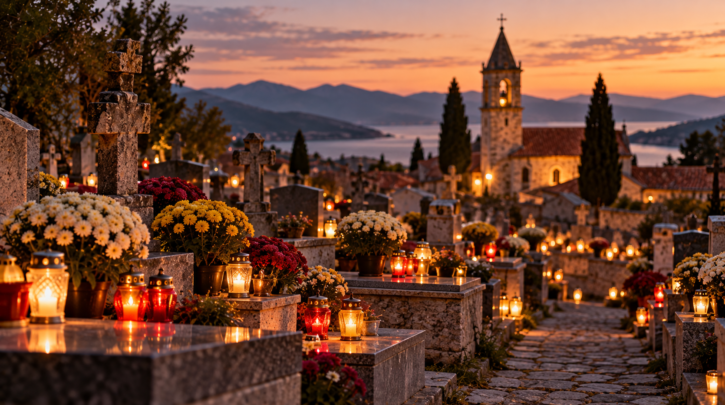
Two kinds of date matter on a Croatian roots trip: the days when offices and archives are shut, and the days when cemeteries are full. They overlap in early November, when All Saints’ Day in Croatia draws families to the graves of their dead and…
 Written by: Croatian Roots Editorial Team
Posted on: October 19, 2026
Getting Around Croatia on a Roots Trip: Buses, Trains and Island Ferries
Getting around Croatia is easy between the big cities and harder at the last mile, and a roots trip lives at the last mile. Archives are in Zagreb and the regional capitals, but a parish may be on an island reached by one ferry a…
 Written by: Croatian Roots Editorial Team
Posted on: October 19, 2026
Entry Rules and Travel Documents for a Croatia Roots Trip
Croatia changed its entry rules when it joined the Schengen area and adopted the euro in January 2023, and since then two EU systems have made headlines: a border register that collects biometrics, and a pre-travel authorization whose launch keeps slipping. What a roots traveler…
 Written by: Croatian Roots Editorial Team
Posted on: October 19, 2026
Visiting Your Ancestral Village in Croatia: What to Expect
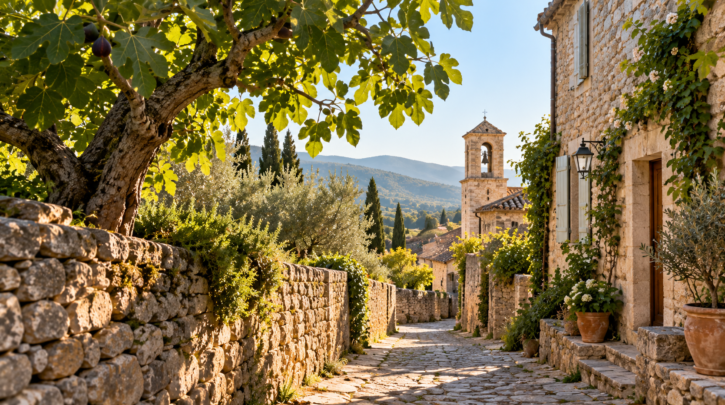
Standing in the village where your family lived is a different kind of research from reading a register. You may find the house, the church and the cemetery, or you may find a priest who lives in the village but cannot be found, a church…
 Written by: Croatian Roots Editorial Team
Posted on: October 19, 2026
Visiting Croatian Archives and Reading Rooms: Zagreb, Zadar and Pazin
For many family historians, a reading room is the point of the trip. Visiting Croatian archives means reading their published hours and rules first, because they differ more than visitors expect: one archive’s central reading room closes early on Fridays, another extends its hours on…
 Written by: Croatian Roots Editorial Team
Posted on: October 19, 2026
Planning a Croatian Roots Trip: The Complete Guide
A Croatian roots trip may finish in a Zagreb reading room, in a stone village on an island or on an empty hillside where a village once stood. Preparation usually decides which. Records say where to go, archives say whom to ask, ferries and buses…
 Written by: Croatian Roots Editorial Team
Posted on: October 19, 2026
DNA Test Privacy and Company Changes: A Checklist for Croatian Families
Before a relative spits into a tube, someone should ask what happens to the result. For Croatian families the question has an extra edge, because DNA links relatives across countries and, on the islands and in small communities, can identify people quickly. This guide is…
 Written by: Croatian Roots Editorial Team
Posted on: October 19, 2026
Croatian DNA Matches and Parish Records: From Cousin to Register
A list of Croatian DNA matches is a set of questions, and the answers are in registers. A match in Chicago may share an ancestor with you in a village near Šibenik, a match in Zagreb may share one in Slavonia, and a match in…
 Written by: Croatian Roots Editorial Team
Posted on: October 19, 2026
Y-DNA and mtDNA in Croatian Family Lines: What the Studies Show
Y-DNA and mtDNA each follow one unbroken line, the father’s father’s line in the first case and the mother’s mother’s line in the second. For a Croatian family, the published studies are unusually rich, because Croatian researchers have sampled the mainland and several Adriatic islands…
 Written by: Croatian Roots Editorial Team
Posted on: October 19, 2026
Reading Balkan DNA Results for Croatian Families
Your report says Balkan, and your family says Croatian. Both are true, and neither tells you what you most want to know. Balkan DNA results describe a region of origin shared by many countries, and the studies of the region’s populations explain why the numbers…