
 Written by: Croatian Roots Editorial Team
Posted on: October 19, 2026
Italianized and Original Croatian Surnames: The 1926 Decrees
If your family came from Istria, Rijeka or Zadar and its surname in the 1930s looks Italian, the name may not be the one your ancestors were born with. In the years after 1926, Italy ordered the Italianization of German, Slovene and Croat surnames in…
 Written by: Croatian Roots Editorial Team
Posted on: October 19, 2026
Croatian Surnames: Origins, Endings and Regional Patterns
A Croatian surname often tells a story in a single word, but it is easy to misread. The most familiar ending, -ić, simply means descendant of; it does not mean noble, and it does not mean a Croatian family, because neighbors share it. This guide…
 Written by: Croatian Roots Editorial Team
Posted on: October 19, 2026
Međimurje: Hungarian-Era Records and the Renamed Villages
Međimurje, the small triangle of northern Croatia between the Mura and Drava rivers, has one of the most distinctive record trails in the country, and most Croatian guides skip it. For almost two centuries before 1918 it belonged administratively to Hungary, not to Croatia, which…
 Written by: Croatian Roots Editorial Team
Posted on: October 19, 2026
Rijeka (Fiume) and the Kvarner: Hungarian, Italian and Croatian Records
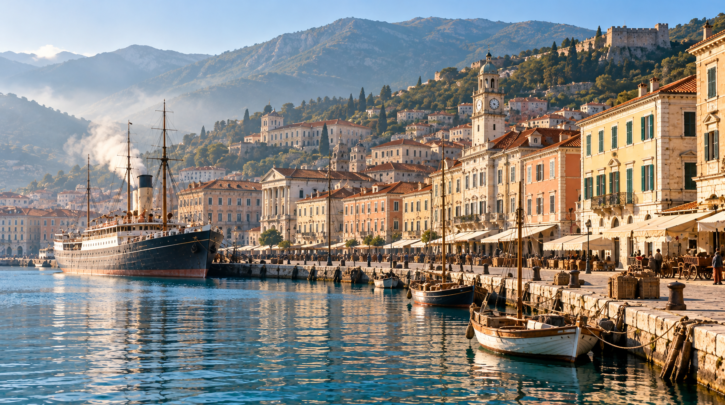
A family from Rijeka may have been born in Fiume, married in a city administered from Budapest, lived under an Italian government and died in Yugoslavia, all without leaving the same street. Few places in Europe changed ruler as often or in as many layers…
 Written by: Croatian Roots Editorial Team
Posted on: October 19, 2026
Dubrovnik and the Republic of Ragusa: Records and Families
Dubrovnik is the exception in Croatian family history. While the rest of the Croatian coast passed between Venice, the Habsburgs and others, the city and its territory were an independent republic, Ragusa, with its own government, its own archive and its own noble class. If…
 Written by: Croatian Roots Editorial Team
Posted on: October 19, 2026
The Military Frontier and Slavonia: Where Frontier Families Left Records
If your family came from the Croatian or Slavonian interior and a story says they were frontier people, soldier-farmers or Grenzer, you are dealing with one of the most unusual administrative units in Europe. The Military Frontier was ruled by the army, not by counties,…
 Written by: Croatian Roots Editorial Team
Posted on: October 19, 2026
Dalmatia and Istria: Venetian, Austrian and Italian Records
Dalmatia and Istria are the Croatian lands where the paper trail speaks Italian. For centuries the coast belonged to Venice, then to Austria, then for part of the twentieth century to Italy, and each ruler left its own layer. A family from a Dalmatian town…
 Written by: Croatian Roots Editorial Team
Posted on: October 19, 2026
Croatia’s Historic Regions and the States That Ruled Them
Ask where a Croatian family came from and the answer is usually a region: Dalmatia, Istria, Slavonia, Zagorje, the islands. Ask which state ruled that region when the family lived there and the answer decides almost everything else about the paper trail: the language of…
 Written by: Croatian Roots Editorial Team
Posted on: October 19, 2026
Croatian Civil Registry Offices and Records After 1946
Parish books carry a Croatian family history back through the centuries, but a century of it sits somewhere else. After 1946, births, marriages and deaths were recorded by the state, in registers kept by civil registry offices, and the documents you need for a modern…
 Written by: Croatian Roots Editorial Team
Posted on: October 19, 2026
Searching ARHiNET and FamilySearch for Croatian Records
Croatian parish registers are gradually moving online, and two systems carry most of the weight: ARHiNET, the Croatian archives’ own information system, and FamilySearch’s collection of Croatian church books. They answer different questions. ARHiNET helps you find which register exists and, for some places, view…